Cat owners often face a tough choice: thriving houseplants or keeping their feline friends safe. The good news? You don’t have to pick just one. Large indoor plants safe for cats do exist, and they can transform your home into a lush, green sanctuary without putting your pet at risk. Whether you’re drawn to statement plants that anchor a room or need to fill empty corners, understanding which species won’t harm your cat is the first step. This guide walks through the safest, most visually striking options and how to display them so everyone, whiskers and leaves alike, can thrive together.
Table of Contents
ToggleKey Takeaways
- Large indoor plants safe for cats include prayer plants, Boston ferns, parlor palms, spider plants, and areca palms, allowing you to create a lush home without risking your pet’s health.
- Verify any plant’s safety using trusted resources like the ASPCA Animal Poison Control Center before bringing it home, as many common houseplants contain toxic compounds that can damage a cat’s digestive system, kidneys, or liver.
- Strategic placement in corner spots, on sturdy plant stands, or with decorative plant guards reduces cat access and prevents soil scattering while keeping large plants visually impactful.
- Consistent watering, monthly leaf cleaning, and regular monitoring for pest infestations help plants thrive and remain less attractive to cats that might otherwise chew on declining foliage.
- Heavy ceramic pots with wide bases and hanging options for trailing varieties like spider plants provide safer display solutions that prevent tipping and keep foliage out of reach.
Understanding Toxicity and Pet Safety
Why Certain Plants Are Dangerous for Cats
Cats are curious creatures, and some will nibble or chew on foliage out of boredom, stress, or just exploring their territory. Many common houseplants, like lilies, sago palms, and dieffenbachias, contain toxic compounds that can cause serious issues in cats. Toxins might damage the digestive tract, kidneys, liver, or heart depending on the plant and dose consumed.
The good news: you can easily avoid these hazards by sticking to toxic house plants documentation and choosing cat-safe varieties instead. Before bringing any large plant home, verify its safety with trusted sources like the ASPCA Animal Poison Control Center or veterinary resources. Not all “tropical” or “easy-care” plants are created equal, so doing your assignments upfront saves panic trips to the vet later.
Understanding plant toxicity also means recognizing how cats interact with plants. Chewing behavior, vomiting, drooling, weakness, or loss of appetite are red flags that your cat may have ingested something harmful. Keep your vet’s number handy and snap a photo of any plant your cat samples, it helps identify the culprit fast.
Best Large Cat-Safe Indoor Plants to Grow
Several stunning large plants are genuinely safe for cats and won’t compromise on visual impact.
Prayer Plants grow to impressive heights and feature striking variegated leaves in shades of red, pink, and cream. They’re non-toxic and tolerate indoor light well, making them ideal for living rooms or bedrooms. These plants prefer consistent moisture, not soggy, but never bone-dry.
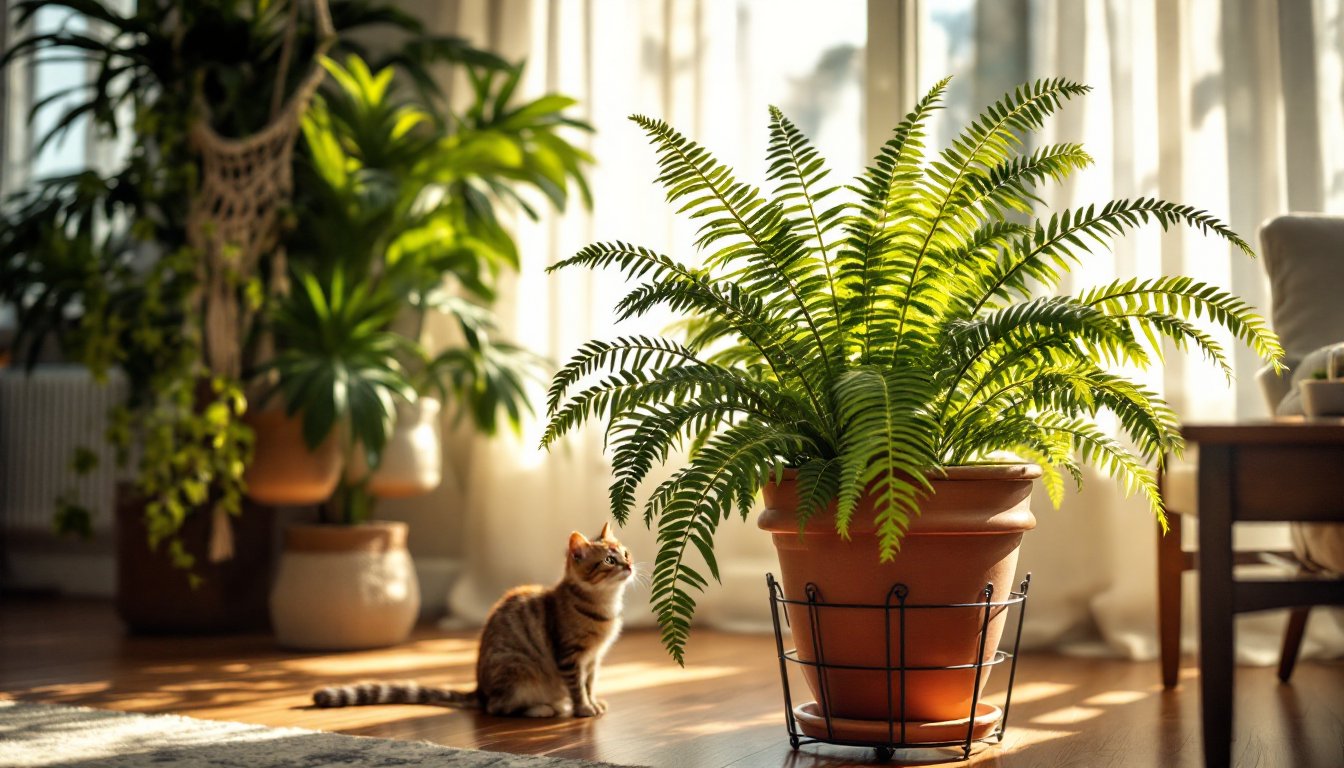
Boston Ferns reach 2 to 3 feet tall indoors and add a soft, feathery texture to any space. Completely cat-safe, they do need humidity and regular misting, so place them near a bright bathroom window if possible. They’re workhorses in humid climates.
Parlor Palms are tall, architectural plants that can grow 4 to 6 feet indoors. They’re safe, relatively easy-care, and bring a tropical feel without the worry. They prefer bright, indirect light and moderate watering.
Spider Plants aren’t just for hanging baskets, mature specimens cascade beautifully and produce dangling babies. Completely safe for cats, they’re nearly impossible to kill and tolerate a range of light conditions. They’re also air-purifying, a bonus win.
Areca Palms grow upright and tall, perfect for filling vertical space. Non-toxic, they prefer bright indirect light and moderate watering. In dry climates, mist regularly to prevent spider mites.
When selecting any large plant, house plants safe for pets guides help confirm safety. Always ask nursery staff about mature size and light requirements before purchasing. A plant that fits your cat’s environment, not just your décor vision, is more likely to thrive long-term.
Strategic Placement and Display Ideas
Where you position a large plant shapes both its survival and your cat’s access to it. Corner spots work well because they’re harder for cats to reach from behind and create a natural focal point. Placing a plant on a sturdy plant stand or shelf raises it partially out of paw’s reach without requiring it to be completely out of reach, most cats lose interest if a plant isn’t easily batted at.
For room dividers, large plants like parlor palms or areca palms work beautifully between a living room and entryway. They create visual separation while allowing light through. Avoid placing large plants directly in high-traffic pathways where a curious cat might weave through foliage and knock soil everywhere.
Bright corners near windows are ideal for light-hungry plants. If your cat enjoys windowsill perching, make sure the plant’s base is stable enough that a jumping cat won’t topple the whole setup. Heavy ceramic pots with a wide footprint beat tall, narrow containers on surfaces where cat traffic is heavy. A plant on a wheeled stand can also be moved seasonally or if a particular spot invites too much feline interest.
Better Homes & Gardens offers solid design inspiration for plant arrangements that balance aesthetics with functionality. The key is combining the plant’s light needs, your cat’s behavior patterns, and your home’s layout into one thoughtful placement decision.
Creating Barriers and Safe Zones
Even with cat-safe plants, physical barriers can prevent soil from getting scattered across your floor and reduce unwanted plant contact. Decorative plant guards, lightweight metal or wooden structures that surround a pot without blocking light, are subtle and effective. They’re especially useful for plants on the floor or low shelves.
Another approach: dedicate a room or area where your cat has limited access. A bedroom, office, or sunroom with a baby gate becomes a plant sanctuary where you keep larger specimens and can water, fertilize, and monitor growth without interruption. This setup also protects young plants that are more fragile than established ones.
Pot selection matters too. Heavy ceramic or terracotta pots are harder to tip than lightweight plastic. Saucers beneath pots catch water runoff and define a clear boundary. Cats often avoid standing water, so a moat of collected drainage water actually deters some from lingering near the pot.
For hanging plants, macramé hangers or wall-mounted brackets keep foliage completely out of reach. While the focus here is on large floor or table plants, hanging a few cat-safe trailing varieties, like spider plants, creates visual interest without risk. Ensure all hardware is rated for the plant’s mature weight: a falling plant injures cats and destroys the plant.
Maintenance Tips for Pet-Friendly Plant Care
Healthy plants are less likely to be bothered by cats, so maintenance directly impacts both the plant and pet safety. Water consistently but let the top inch of soil dry between waterings for most large houseplants. Overwatered plants develop weak growth that cats damage more easily. Use room-temperature water and water in the morning so excess evaporates throughout the day.
Fertilize during growing season (spring and summer) using a balanced, non-toxic fertilizer. Organic fertilizers like fish emulsion or kelp are safer if your cat ingests a small amount, though they’re still meant for plants, not pets. Always follow label directions and avoid over-fertilizing, excess nutrients don’t help and can harm roots.
Wipe large leaves monthly with a soft, damp cloth to remove dust and pests. This keeps the plant visually stunning and you’ll spot spider mites, mealybugs, or other issues early. Pest problems sometimes make cats more interested in chewing as the plant’s health declines, so prevention is worth the effort.
Rotate large plants 90 degrees weekly during growing season so they develop evenly and don’t lean toward light sources. This keeps the plant looking full and balanced, and the movement itself can deter some cats from settling into a “favorite chewing spot.” Repot in spring when roots begin circling the soil surface, usually every 12 to 18 months for fast-growing species.
Monitor for signs of pest infestation or disease. Yellowing leaves, brown patches, or sticky residue warrant investigation. Treat problems promptly with neem oil or insecticidal soap, always check that treatments are pet-safe before applying. The Spruce has comprehensive guides on pest management and plant health that apply whether you have cats or not.
Conclusion
Creating a cat-safe plant collection means balancing your love for greenery with your responsibility to your pet’s wellbeing. By choosing species like prayer plants, parlor palms, and spider plants, placing them thoughtfully around your home, and maintaining them well, you’ll build a thriving indoor garden that’s genuinely safe. Your cat may still show interest, that’s normal, but cat-safe plants mean no emergency vet visits. Start with one or two large plants, observe how your cat reacts, and expand from there. The result is a lush, beautiful home where both you and your feline friend can flourish.