Living in a 3-bedroom tiny house means rethinking how you use every inch of space. Whether you’re downsizing by choice or building one from scratch, a well-designed 3-bedroom tiny house can feel spacious and functional instead of cramped. The key is strategic layout planning, multi-purpose zones, and smart storage solutions that let you live comfortably without sacrificing your need for separate bedrooms. This guide walks you through the layout principles, design tricks, and practical solutions that make 3-bedroom tiny houses work in real life.
Table of Contents
ToggleKey Takeaways
- A 3-bedroom tiny house typically ranges from 600 to 1,000 square feet with compact bedrooms (80–150 sq ft each) that provide privacy while consolidating common living areas into an open-concept layout.
- Master bedrooms benefit from vertical storage solutions like wall-mounted shelving, floating nightstands, and bed frames with built-in drawers, plus strategic lighting with wall sconces and dimmer switches to maximize functionality.
- Secondary bedrooms work best with twin or full beds paired with built-in bunks, platform frames with storage, or murphy beds that free up floor space for multi-use functions.
- A unified kitchen-dining-living zone can be visually separated without walls using kitchen islands, flooring transitions, light colors, and strategically arranged floating furniture that defines distinct areas.
- Strategic storage through built-in shelving, closet systems with double rods, vertical wall organizers, and under-stair solutions is essential to prevent clutter and maximize usable space in a 3-bedroom tiny house.
- Multiple light sources including recessed lighting, wall sconces, and floor lamps make tight spaces feel open and airy, while light neutral wall colors and high window placement amplify the sense of spaciousness.
Understanding the 3-Bedroom Tiny House Layout
A 3-bedroom tiny house typically ranges from 600 to 1,000 square feet, with the floor plan arranged to keep bedrooms separate while consolidating common living areas. The standard approach places a master bedroom at one end and two secondary bedrooms clustered near it, leaving the bulk of the footprint for an open-concept kitchen, dining, and living zone.
The layout works best when bedrooms are compact, typically 80 to 150 square feet each, with doors that close off sound and visual clutter from shared spaces. This separation is what makes a 3-bedroom layout feel fundamentally different from an open studio: families and co-occupants get privacy at night without needing sprawling halls or duplicate kitchens.
Measuring twice before you commit to any layout change is non-negotiable. Use graph paper or a free tool like Apartment Therapy’s space planning guides to sketch your existing floor plan and test furniture placement. Know the width of doorways (typically 30 to 36 inches), ceiling heights, and the location of load-bearing walls before proposing any structural changes.
Master Bedroom: Creating a Comfortable Private Retreat
The master bedroom in a tiny house should prioritize the bed, it’s usually the largest piece of furniture and sets the room’s footprint. A queen bed (60″ × 80″) leaves roughly 3 to 4 feet of clearance on sides and foot in a 12′ × 12′ room, which is standard for a comfortable master in this setting.
Vertical storage is your best friend here. Wall-mounted shelving above the bed headboard, floating nightstands, and a tall dresser tucked against one wall free up floor space for movement. Consider a bed frame with built-in drawers underneath, these recessed storage units don’t add visual bulk but capture otherwise wasted space.
Lighting matters more in a small bedroom. Install a dedicated wall sconce on each side of the bed for reading without needing a bulky nightstand lamp. A dimmer switch gives you flexibility between task lighting for dressing and softer light for winding down. If permits allow and you’re comfortable with basic electrical work, adding a sconce is a straightforward project involving running cable through the wall and patching drywall.
Windows can make or break a master bedroom’s feel. If your tiny house design includes a window in the master, maximize it with light, airy curtains, heavy drapes will make the room feel boxed in. A quality roller shade or cellular shade underneath provides privacy and thermal control without the visual weight.
Secondary Bedrooms: Space-Saving Solutions for Multiple Occupants
The two secondary bedrooms in a 3-bedroom tiny house are often 80 to 100 square feet each, roughly the size of a walk-in closet in a conventional home. This means every piece of furniture needs to earn its place.
Twin or full beds are the practical choice here. A twin bed (39″ × 75″) takes up significantly less floor space than a queen, making the room feel open and usable. If you need a full bed (54″ × 75″), consider a platform bed or frame with storage drawers, this hidden storage replaces what a standalone dresser would occupy.
Built-in bunks are the gold standard for dual-occupancy tiny bedrooms. When built to fit the wall dimensions exactly, bunks with a study desk underneath or storage cubbies create a complete zone for two kids or guests without consuming extra floor area. But, bunks require carpentry skills or a professional to ensure they’re structurally sound and safely anchored, never skimp on this. Building codes vary, but permanent fixtures like bunks often need to be tied into the house framing with bolts or structural brackets rated for the load.
One secondary bedroom works well as a guest room with a murphy bed (wall-mounted fold-down) or daybed, reclaiming that 80 square feet for an office, craft table, or flex space when not in use. Murphy bed kits are available pre-assembled, but installation demands precision measurements and, usually, into-stud anchoring, this isn’t a project for someone’s first attempt at wall modification.
Multifunctional Living Spaces: Kitchen, Dining, and Living Combined
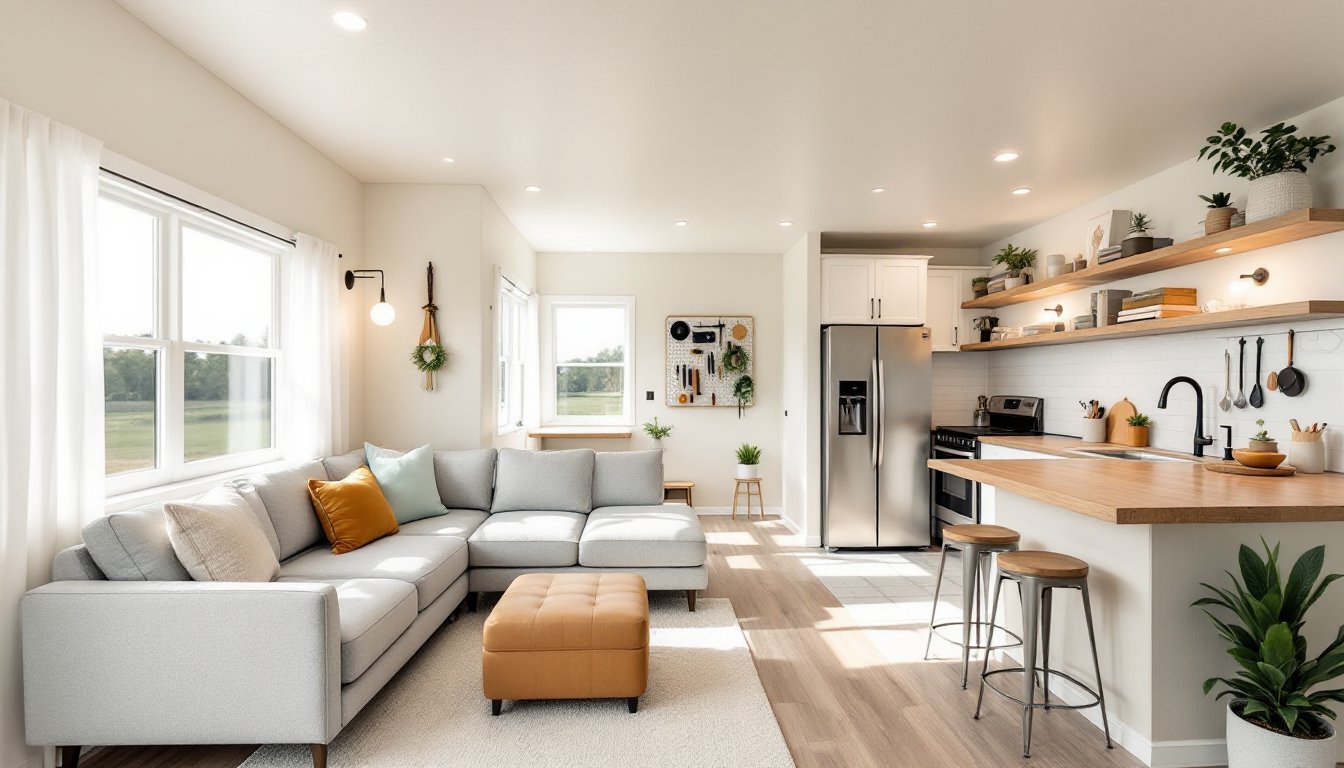
The heart of a 3-bedroom tiny house is its unified living zone, often 300 to 400 square feet that must serve as kitchen, dining area, and living room. The secret to making this work is visual and functional separation without walls.
A kitchen island or peninsula (an island anchored to one end) acts as both a boundary and a functional workspace. A 24″ to 36″-deep counter with stools on one side creates a casual dining spot, food prep surface, and visual anchor that separates the kitchen from the living area. If you’re installing one, ensure electrical rough-in includes outlets and, if applicable, gas lines before you finalize placement.
Flooring transitions help too. A slightly raised floor, a subtle color change, or a different material, like a small tile inlay or runner rug, signals a shift from kitchen to dining without a wall. This costs nothing if you’re working with existing floors, and it’s a design detail borrowed from Real Simple’s home organization tactics for visually carving space.
Furniture arrangement in the living room should float pieces slightly away from walls to create pathways and break up the box feeling. A sectional sofa in an L-configuration takes up less visual footprint than a sofa plus loveseat, and choosing a light fabric or neutral color keeps it from dominating the room. A storage ottoman that doubles as a coffee table and hidden storage is a classic tiny-house move that’s worth the investment.
Storage Strategies That Transform Your Tiny House
Storage makes or breaks tiny house living. Without dedicated closets and cabinetry, you’ll end up with clutter consuming every surface.
Built-in shelving and cabinetry should be your priority. Running shelves around the top of a wall (18″ to 24″ below the ceiling) costs less than you’d think and reclaims wasted vertical space for off-season items, books, or display. Wall-mounted magnetic strips for kitchen knives, pegboards for tools, and hanging rod organizers for accessories keep essentials accessible without floor footprint.
Underneath stairs (if your tiny house has a loft or upper floor) is prime real estate: built-in drawers, shelves, or a closet rod uses dead space that serves no other purpose. This is a carpentry job, but it’s worth professional help to ensure drawers slide smoothly and don’t sag over time.
For renters or those avoiding permanent modifications, IKEA Hackers offers creative storage solutions by modifying affordable furniture. Tall Billy bookcases fastened to wall studs can look built-in, and kallax shelving units are lightweight and widely customizable. Use painter’s tape to map out placement before you drill.
Closet systems, rods, shelves, and hanging organizers, are non-negotiable in tiny bedrooms. A standard closet rod is 30″ deep: adding a second rod halfway up doubles hanging capacity for shorter items like shirts and folded pants. Vacuum-sealed storage bags compress seasonal clothing to a fraction of their bulk, saving closet space without losing access.
Lighting and Color: Making Tight Spaces Feel Open and Airy
Lighting has an outsized impact on how spacious a tiny house feels. A single overhead fixture leaves corners dark and shadows harsh: multiple light sources, recessed ceiling lights, wall sconces, floor lamps, and task lighting, create depth and warmth.
Recessed lighting (downlights mounted flush into the ceiling) uses no visual space and spreads light evenly. Installation requires running electrical cable above the ceiling and cutting holes, doable for a handy person with a drywall saw and electrical know-how, but inspect your ceiling for joists and existing wiring first. If you’re uncomfortable with electrical work, hire it out: a mistakes here can damage wiring or compromise structural integrity.
Color choices shape perceived space. Light, neutral walls (soft whites, pale grays, warm creams) reflect light and make rooms feel larger, while warm accent colors on one feature wall add personality without closing in the space. Ceilings painted slightly lighter than walls visually raise them. Keep trim and baseboards a similar shade to walls to reduce visual breaks.
Window treatments matter more in small spaces than large ones. Sheer curtains diffuse light while maintaining privacy: heavier drapes should be mounted high and wide of the window frame to make windows appear larger. Skylights or transom windows above doorways add light and architectural interest when structural changes allow it, though this requires more substantial renovation and a building permit in most jurisdictions.
Conclusion
A 3-bedroom tiny house isn’t a compromise on comfort, it’s a deliberate choice to use space efficiently and eliminate unnecessary square footage. Thoughtful layout, multi-functional zones, smart storage, and design details like lighting and color create a home that’s compact without feeling cramped. The projects outlined here range from simple (rearranging furniture, adding shelves) to structural (bunks, built-ins), so prioritize what fits your skills and hire professionals for electrical, load-bearing, or permit-required work. Start with a clear floor plan, measure twice, and build strategically.