Indoor plants bring life to your home, but spider mites, mealybugs, and scale insects can quickly turn that green thumb into a frustration. If you’ve noticed sticky residue on leaves or tiny crawling pests, you’re facing a common indoor plant problem that doesn’t require harsh chemicals to solve. Insecticidal soap offers a practical, low-toxicity alternative that works against soft-bodied insects without the drawbacks of synthetic pesticides. Whether you’re dealing with a single infested plant or looking to prevent pest outbreaks before they start, understanding how insecticidal soap works, and how to use it correctly, can save your collection and keep your indoor garden thriving.
Table of Contents
ToggleKey Takeaways
- Insecticidal soap eliminates soft-bodied insects like spider mites and mealybugs by breaking down their waxy protective layer, making it a low-toxicity, safe alternative to harsh chemical pesticides.
- Apply insecticidal soap in early morning or evening below 75°F, ensuring thorough wet coverage of leaf undersides and stems, then rinse after 10–15 minutes to prevent salt buildup and maximize effectiveness.
- Repeat applications every 5–7 days for 2–3 weeks when treating infestations, and avoid waiting for pests to spiral—early intervention reduces plant stress and the number of treatments needed.
- Store-bought insecticidal soap products outperform DIY dish soap solutions because they contain correct fatty acid formulations without damaging additives like dyes and degreasers.
- Combine insecticidal soap with preventive practices like monthly leaf wiping, below-watering, proper humidity control (40–50%), and quarantining new plants to eliminate indoor plant pests for long-term success.
- Unlike chemical pesticides, insects cannot build resistance to insecticidal soap’s physical mechanism, and the soap biodegrades quickly without leaving toxic residue in soil or potting mix.
What Is Insecticidal Soap and How Does It Work
Insecticidal soap is a contact pesticide made from potassium salts of fatty acids, essentially the soap byproducts from plant or animal oil processing. It sounds technical, but the mechanism is straightforward: when the soap contacts the insect’s exoskeleton, it breaks down the outer waxy layer that protects the bug from dehydration. The insect loses moisture and dies within hours or days, depending on the species and spray coverage.
Unlike systemic insecticides that enter the plant’s vascular system, insecticidal soap only works on soft-bodied insects it directly touches. This means spider mites, aphids, whiteflies, mealybugs, and scale crawlers (in early nymph stages) are vulnerable, but hard-shelled beetles and most soil-dwelling pests are resistant. The soap breaks down quickly, usually within hours to a few days, leaving no persistent residue on leaves or in the potting mix. This rapid biodegradation is why repeat applications are often necessary: the soap doesn’t prevent reinfestation, only kills active pests at contact.
Store-bought formulas typically contain fatty acid salts (the active ingredient), water, and sometimes surfactants or thickeners to improve coverage. The concentrate or ready-to-spray bottles you’ll find at garden centers all function the same way, it’s just a matter of dilution and delivery method.
Why Insecticidal Soap Works Better Than Chemical Pesticides
Chemical synthetic pesticides, like pyrethroids or neonicotinoids, are more potent and longer-lasting, which sounds like an advantage until you’re living in the space where you sprayed. Insecticidal soap avoids the drawbacks of these harsher options without sacrificing effectiveness for the job it’s designed to do.
First, safety: insecticidal soap carries minimal toxicity to humans, pets, and beneficial insects when used as directed. You won’t need a respirator or specialized safety gear beyond gloves and eye protection: it won’t accumulate in soil or harm earthworms if it drains through. Chemical pesticides, by contrast, often require careful ventilation, extended stay-out periods, and precautions for children and pets.
Second, plant tolerance: insecticidal soap rarely damages foliage when applied at the correct concentration and temperature. Certain soft-leaved plants and flowers can show burn if sprayed in direct sunlight or during extreme heat, but this is easily avoidable with proper timing. Hard-to-kill plants like pothos, philodendrons, and snake plants tolerate insecticidal soap without issue.
Third, resistance: pests don’t develop immunity to soap as easily as they do to repeated synthetic pesticide applications. Insects can’t metabolize or adapt to a soap film breaking down their waxy coat, the mechanism is physical, not biochemical. Rotating soap applications with other non-chemical methods (like neem oil or horticultural oil) keeps pests from building tolerance.
Finally, environmental footprint: when soap breaks down, it becomes harmless fatty acids and water. There’s no persistent contamination of potting mix, no bioaccumulation, and no long-term soil toxicity concerns.
When to Use Insecticidal Soap on Indoor Plants
The best time to use insecticidal soap is as soon as you spot pest activity, don’t wait for an infestation to spiral. Early intervention means fewer applications, less plant stress, and a faster recovery. If you see webbing (spider mites), sticky honeydew drips on leaves below (scale or mealybugs), or clusters of tiny insects on new growth, it’s time to treat.
Apply insecticidal soap in the morning or evening when pests are most active and temperature is below 75°F (24°C). Heat can cause the spray to dry too quickly or burn foliage. Avoid spraying in direct sunlight: wait until the plant is in indirect light or shade. Indoor environments are ideal because you can control temperature and humidity without worrying about rain washing off the soap.
Repeat applications every 5–7 days for 2–3 weeks, checking the plant between sprays to confirm the pest population is dropping. Mealybugs and scale can hide in leaf joints and under bark, so thorough coverage matters more than frequent spraying. If pests persist after three applications, the problem may require a different approach (removing heavily infested leaves, repotting into fresh soil, or switching to neem oil).
How to Apply Insecticidal Soap Correctly
Proper technique makes the difference between success and disappointment. Here’s the step-by-step approach:
-
Dilute correctly: Follow the product label precisely. Most concentrates mix at a ratio of 1 part soap to 10–20 parts water: ready-to-spray bottles are already diluted and don’t need mixing. Stronger isn’t better, overdilution wastes product, and underdilution risks leaf burn.
-
Prep the plant: Use a soft brush or cloth to gently wipe visible pests off leaves if the infestation is light. This removes dead skin and honeydew buildup that can block spray coverage. Move the plant to a sink or tub so runoff doesn’t stain floors.
-
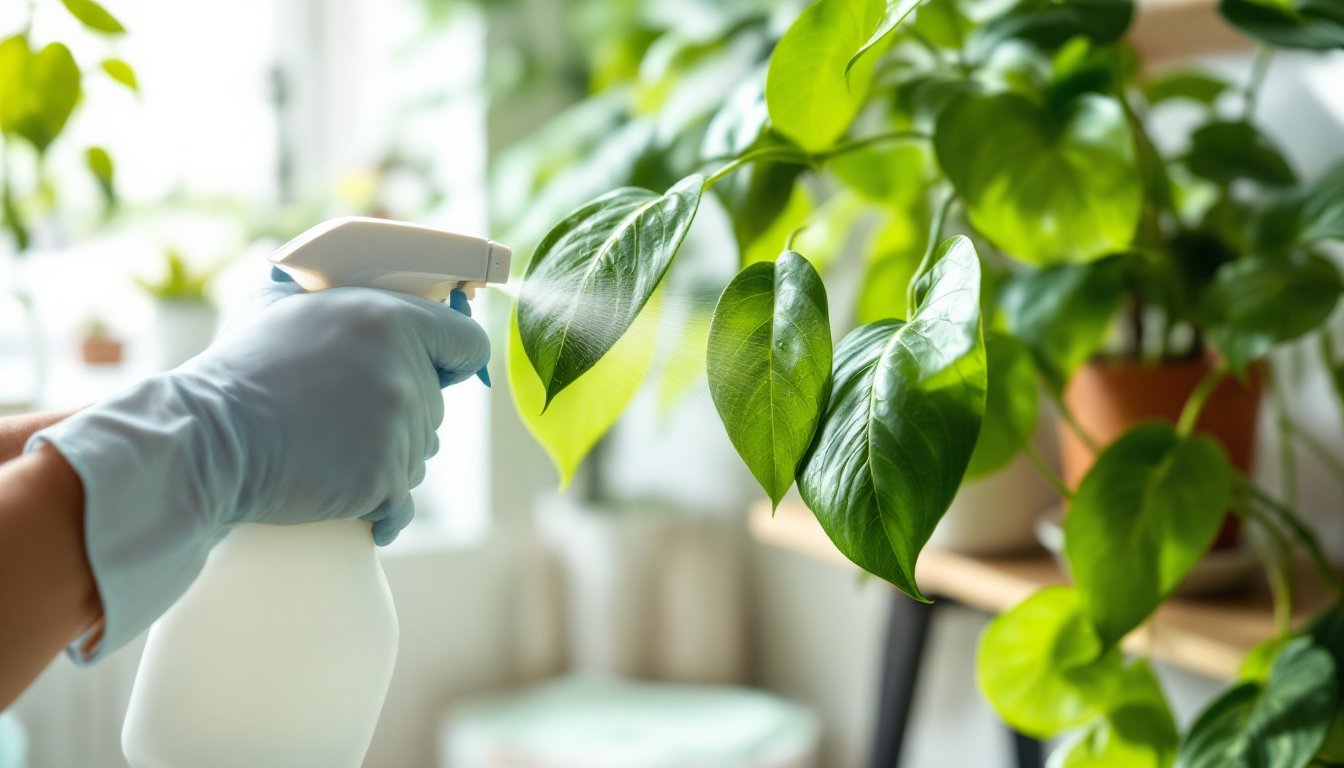
Spray thoroughly: Use a hand-pump sprayer or trigger bottle to apply soap until leaves drip slightly, undersides, stem joints, and new growth are critical. Don’t mist lightly: you need wet coverage for the soap to penetrate the insect’s waxy coat. A pump sprayer (not an aerosol) gives you better control and penetration than a spray bottle for larger plants.
-
Wait before rinsing: Let the soap sit for 10–15 minutes, then rinse the plant with lukewarm water to remove excess soap and dead pests. This prevents salt buildup and leaf spotting from dried soap residue.
-
Isolate treated plants: Keep treated plants away from untreated ones for a day or two to prevent pests from migrating. If you’re treating a group of plants, do all of them on the same day.
Safety first: Wear nitrile gloves and eye protection. If soap gets in your eyes, rinse with water for 15 minutes. Avoid breathing spray mist: work in a well-ventilated area or near an open window.
DIY vs. Store-Bought Insecticidal Soap
You can make a basic insecticidal soap at home using dish soap and water, but there’s a critical caveat: plain dish soap isn’t the same as insecticidal soap. Dish soaps contain dyes, perfumes, and degreasers that can damage plant foliage. If you’re determined to DIY, use pure castile soap (like Dr. Bronner’s) at a ratio of 1 teaspoon per quart of water, no more. Even then, test it on a single leaf first and wait 24 hours to check for damage.
For most situations, buying a commercial insecticidal soap is worth it. Products like Safer’s Insecticidal Soap, Ortho Insecticidal Soap, or botanical brands use the correct fatty acid formulations and include minimal additives. A bottle costs $8–15 and treats dozens of plants over a season. The consistency, reliability, and faster results outweigh the minor cost.
Ready-to-spray bottles cost slightly more per application but eliminate dilution mistakes and are convenient for quick treatments. Concentrate bottles are more economical if you’re treating multiple plants regularly. Both work equally well: it’s a matter of convenience and storage preference.
One more note: don’t confuse insecticidal soap with neem oil or horticultural oil. They’re separate products with different mechanisms. Neem oil suffocates soft-bodied insects and disrupts their reproduction: horticultural oil works similarly but is refined petroleum. Insecticidal soap is the mildest option and works best for quick knockdown of active pests without risk of oil film buildup on leaves.
Tips for Safe and Effective Indoor Plant Pest Control
Beyond spraying, small habits prevent pests from taking hold in the first place. Inspect new plants before bringing them home and quarantine any purchase for a week in a separate room, pests love hitchhiking on fresh foliage. Wipe leaves monthly with a damp cloth to remove dust and early pest colonies before they explode into a problem.
Water from below rather than overhead to keep foliage dry. Moist leaf surfaces attract spider mites and create conditions where fungal issues follow pest infestations. Ensure pots have drainage holes and use well-draining potting mix: waterlogged soil stresses plants and invites root rot, which compounds pest problems.
Maintain moderate humidity (40–50% is ideal for most houseplants) and air circulation with a small fan on low speed. Stagnant, humid air favors scale, mealybugs, and fungus gnats. Grouping plants together increases humidity without creating a disease-prone microclimate if you avoid overcrowding.
If you suspect pests early, remove the worst-affected leaves entirely and discard them in sealed plastic (not your compost bin). A single infested leaf can harbor hundreds of eggs. For heavily colonized plants, cut off all growth above the soil line and let the plant regrow, it’s harsh but faster than a months-long spray schedule if the plant is resilient enough to tolerate it.
According to methods to eliminate bugs from indoor houseplants, combining insecticidal soap with manual removal and environmental controls gives the best outcomes. Soap is a tool, not a cure-all: use it as part of a broader pest management approach that includes inspection, isolation, and environmental tweaks.
Conclusion
Insecticidal soap is an effective, safe first line of defense against soft-bodied indoor plant pests. It works fast, leaves no toxic residue, and aligns with the practical, low-impact approach most DIY plant lovers prefer. The key is catching pests early, applying spray thoroughly, and repeating as needed, there’s no shortcut to consistent results. With a bottle in your gardening kit and a routine inspection habit, you’ll keep spider mites, mealybugs, and whiteflies from derailing your indoor garden.