Cat owners face a real dilemma: the desire to bring houseplants into the home for beauty and air quality often conflicts with keeping feline companions safe. Many popular indoor plants commonly found in gardens and living rooms are toxic to cats, and even small ingestions can trigger serious health issues. Understanding which plants pose the greatest risk and how to recognize poisoning symptoms is essential for anyone juggling both pets and plants. This guide walks through the most dangerous houseplants, warning signs of toxicity, and practical alternatives that let homeowners enjoy greenery without compromise.
Table of Contents
ToggleKey Takeaways
- Lilies, sago palms, and dieffenbachia are among the most dangerous indoor plants poisonous to cats, with even small ingestions potentially causing organ failure or life-threatening symptoms within hours.
- Cats are naturally attracted to houseplants due to hunting instincts and curiosity, making prevention through plant removal the most reliable safety strategy for cat owners.
- Early symptoms of plant poisoning include drooling, vomiting, and lethargy, but silent poisonings can develop over 24–72 hours, requiring immediate veterinary attention if toxicity is suspected.
- Safe houseplant alternatives like spider plants, prayer plants, Boston ferns, and cat grass allow cat owners to enjoy greenery without compromising their pet’s safety.
- Physical barriers, honest assessment of existing plants, and removal of toxic species are more effective than deterrent sprays for protecting cats from poisonous houseplants in the home.
Why Cats Are Attracted To Houseplants
Cats are naturally drawn to houseplants for several behavioral reasons. The moving leaves trigger their hunting instincts, and many plants rustle or sway in a way that mimics prey. Some cats are simply curious about texture and will chew on leaves or stems out of boredom or to settle an upset stomach, cats don’t always distinguish between safe and toxic plants.
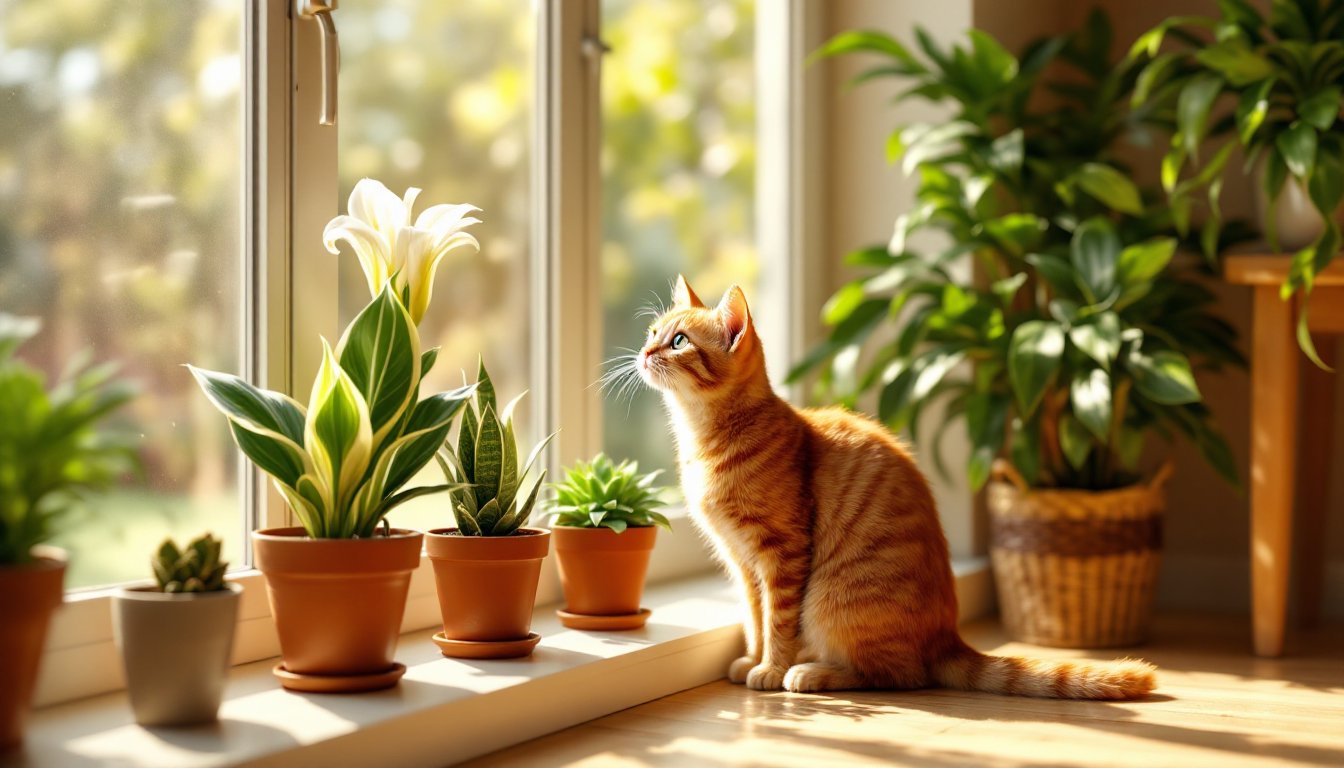
Younger cats and indoor-only cats are especially prone to plant exploration since they haven’t learned what’s safe through real-world experience. The problem gets worse in homes where windows receive plenty of light, because that’s exactly where plant lovers place their collections. A sunlit windowsill becomes a perfect playground for a curious cat.
Not every cat will nibble plants, but even a single chew or lick of a highly toxic species like a lily can cause life-threatening kidney failure within hours. That unpredictability is why prevention, removing the temptation altogether, remains the most reliable strategy.
Common Toxic Houseplants Every Cat Owner Should Know
Lilies, Sago Palms, and Dieffenbachia
Lilies are among the deadliest plants for cats, and all parts, petals, pollen, leaves, and even the water in the vase, contain compounds that destroy the kidneys. A cat who ingests as little as a single leaf can face acute kidney injury within 24 to 72 hours, often with no early symptoms until damage is irreversible. Easter lilies, tiger lilies, and Asiatic varieties are equally toxic.
The sago palm (not a true palm but a cycad) is another critically dangerous houseplant. Even small amounts of seeds or leaves contain cycasin, a liver toxin that causes vomiting, lethargy, and potential hepatic failure. Many cat owners don’t realize how toxic this common decorative plant truly is.
Dieffenbachia (also called dumb cane) contains calcium oxalate crystals that irritate the mouth, throat, and digestive tract. While rarely fatal, it causes painful swelling and difficulty swallowing, requiring emergency veterinary care. The plant’s attractive speckled leaves make it tempting to cats, but it should never share a home with felines.
Oleander, Azaleas, and Jade Plants
Oleander is a flowering shrub popular in home décor and seasonal arrangements. All parts contain cardiac glycosides, toxins that affect heart rhythm and can trigger vomiting, diarrhea, weakness, and dangerous arrhythmias. Even a few leaves pose a serious risk.
Azaleas and rhododendrons (closely related plants) contain grayanotoxins that damage the digestive system and cardiovascular function. Symptoms appear within a few hours and include drooling, vomiting, loss of appetite, and potentially fatal heart arrhythmias. These plants are common in spring arrangements, making them a seasonal hazard.
The jade plant (Crassula ovata) is sometimes overlooked because it’s a succulent and seems harmless. But, it’s toxic to cats and causes vomiting, depression, and lack of coordination. While toxicity is typically mild to moderate compared to lilies, jade poisoning still warrants veterinary attention. For a cat-safe alternative, consider air plants or spider plants instead.
Symptoms of Plant Poisoning in Cats
The onset and severity of symptoms depend on which plant was ingested and how much. Early warning signs include drooling, lip smacking, vomiting, and diarrhea, often appearing within minutes to hours. Some cats become lethargic or lose interest in food, while others show obvious oral irritation like reluctance to swallow or pawing at the mouth.
More serious symptoms emerge within 24 to 72 hours, especially with lilies. These include pale gums, lethargy that won’t improve, reduced urination or absence of urination, and seizures. Any of these warrant an emergency vet visit, don’t wait to see if symptoms resolve on their own.
The challenge is that some poisonings develop silently. A cat may ingest a tiny piece of lily petal with no immediate sign, then crash days later as kidney function deteriorates. This is why the best approach is prevention: remove the plant entirely if there’s any doubt. Keep any toxic house plants off-limits and out of reach.
If poisoning is suspected, call a poison control center for animals (like the ASPCA Animal Poison Control Center at 888-426-4435) or head to an emergency vet immediately. Bring a sample or photo of the plant so the vet can confirm what was ingested and determine treatment.
Safe Plant Alternatives For Your Home
The good news: plenty of attractive, low-maintenance houseplants are completely safe for cats. Spider plants are nearly indestructible, fast-growing, and actually safe even if a cat nibbles them. They’re also excellent air purifiers, so they earn their place in any room.
Prayer plants (Maranta) have beautiful patterned leaves and are non-toxic to cats. They prefer indirect light and humidity, thriving in bathrooms or next to humidifiers. Boston ferns, African violets, and orchids are equally safe and add visual interest without risk.
Cat grass (wheatgrass, oat grass, or barley grass) is a pro move. Cats naturally seek out grass to settle their stomachs, and providing a designated, safe grass planter can redirect their plant-chewing impulses. Many pet stores sell cat grass kits that grow quickly and cheaply.
For those wanting trailing plants, golden pothos and philodendrons, while toxic, have safe cousins. Areca palms, bamboo palms, and parlor palms are true palms (unlike the toxic sago palm) and are safe to keep around cats. For decorative flair, try gloxinia or calathea, both non-toxic and stunning.
Check resources like the ASPCA’s toxic and non-toxic plants list or consult with a local nursery before purchasing. When in doubt, skip the plant. No houseplant is worth a veterinary emergency.
Prevention Strategies and Cat-Proofing Tips
Start with an honest assessment: list every houseplant currently in the home and cross-reference it against toxicity databases. If any are toxic, remove them immediately. Don’t try to “keep them away” by placing them high on shelves, cats are agile, and a single leaf landing on the floor is enough.
For those unwilling to part with a favorite plant, physical barriers work. Place toxic plants behind a closed door, in a room the cat can’t access, or in a high, very stable enclosure where jumping is impossible. Hanging planters need to be truly out of reach (not just on a table that a cat can leap to).
Make safe plants more appealing. Place cat grass in prominent spots and refresh it often. Use attractive pots so safe plants are visually comparable to the toxic ones you’re removing. The goal is to make cat-safe plants feel intentional, not like a consolation.
Be careful with floral arrangements and holiday decorations. Fresh flowers from the florist often include lilies, roses, and other stems that may have been treated with pesticides or preservatives. Seasonal décor like poinsettias (mildly toxic) and Christmas cactus (safe) both appear during holidays, know which is which.
Use strong-scented deterrents as a backup, though they’re unreliable. Citrus sprays, capsaicin sprays, or even double-sided tape around the base of pots may deter some cats, but determined nibblers ignore them. Supervision and removal remain the gold standard. When choosing best house plants for a multi-pet household, safety must come first.