Most people underestimate the power of a few well-chosen indoor plants to transform a bedroom. Beyond just looking good, the right indoor plants for bedroom spaces actively improve air quality, reduce stress, and create a calming atmosphere that supports better sleep. Whether you’re a seasoned plant parent or picking up your first pot, this guide walks you through the best low-maintenance plants suited to bedroom conditions, plus practical tips for keeping them thriving without fuss.
Table of Contents
ToggleKey Takeaways
- Indoor plants for bedroom spaces actively improve air quality, reduce stress, and support better sleep by filtering toxins like formaldehyde and benzene while releasing oxygen.
- Snake plants and pothos are the best low-maintenance bedroom plants because they tolerate low light, irregular watering, and thrive in neglect—making them ideal for beginners.
- The most common bedroom plant mistakes are overwatering (check soil moisture before watering), poor drainage (always use pots with drainage holes), and unrealistic light expectations for dark rooms.
- Bedroom environments need 60–75°F temperatures, moderate humidity (40–60%), and well-draining potting mix in containers with drainage holes to prevent root rot.
- Start with one forgiving species like a snake plant, master the basics of drainage and watering, and your bedroom will become a healthier, calmer sleeping retreat.
Why Indoor Plants Belong In Your Bedroom
Your bedroom isn’t just a place to sleep, it’s a personal retreat where air quality directly affects how rested you feel. Indoor plants naturally filter airborne toxins like formaldehyde and benzene, releasing oxygen in the process. Studies show that plants in sleeping spaces improve oxygen levels and can even lower stress hormones, which means you’re not just getting fresh air: you’re getting better sleep.
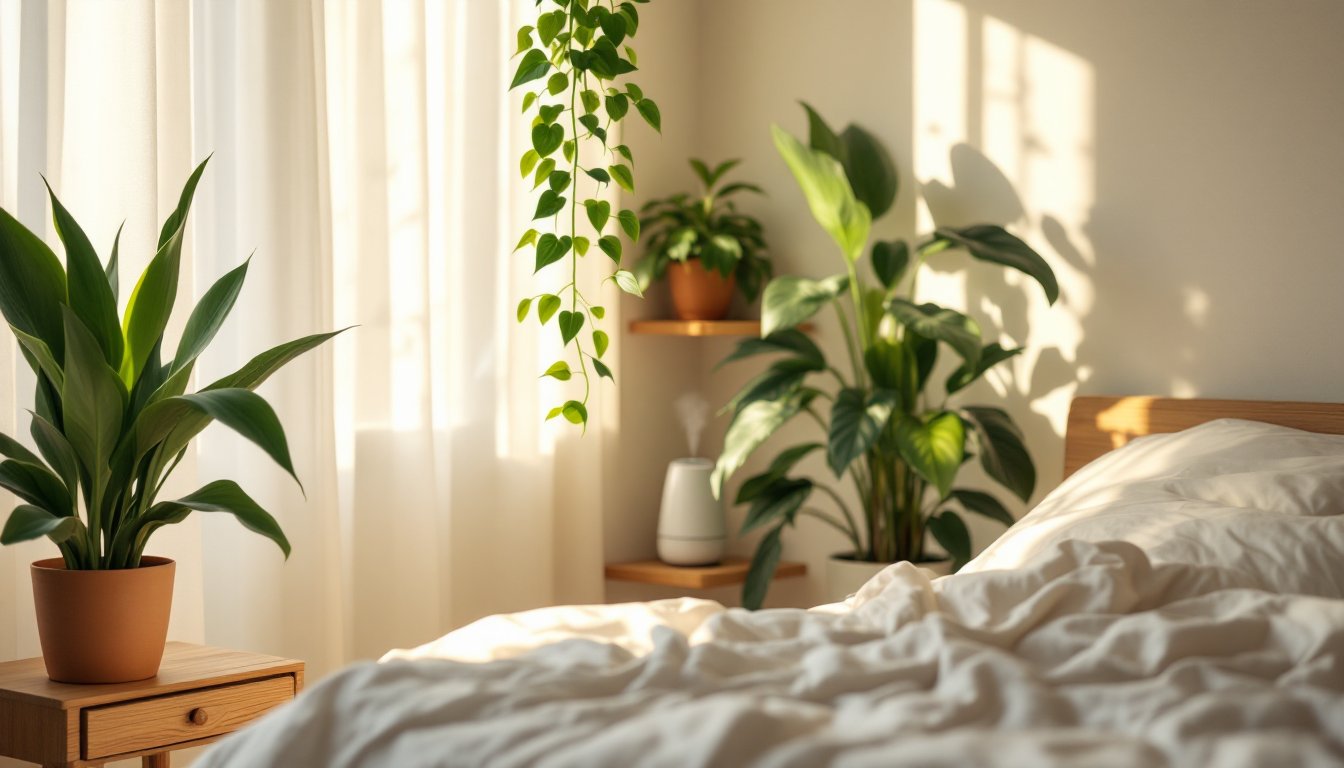
Beyond the science, plants add visual calm to a room. A potted green companion on the nightstand or a trailing vine above a window creates a natural focal point that encourages relaxation. Unlike digital screens or cluttered surfaces, plants engage your mind without overstimulating it. They’re also practical: a single trailing plant can fill an awkward corner, a tall specimen adds vertical interest without needing floor space, and grouping plants on a shelf creates a living accent wall.
Best Low-Maintenance Plants For Bedroom Spaces
The trick to bedroom plants is picking species that don’t demand constant attention. Bedrooms often have lower light than living rooms, and most people don’t want to fuss with daily watering before bed. Fortunately, some of the most resilient plants thrive in exactly these conditions.
When shopping, look for plants labeled as shade-tolerant and drought-resistant. These typically have thicker leaves or succulent tissue, which means they store water internally. They’ll forgive you if you miss a week of watering, and they won’t sulk if your room doesn’t get direct afternoon sun. A few standouts deserve special attention for bedroom use.
Snake Plant: The Air-Purifying Champion
The snake plant (Sansevieria trifasciata), also called mother-in-law’s tongue, is the poster child for low-maintenance bedroom plants. It tolerates near-total neglect: low light, irregular watering, and even occasional temperature swings. It also ranks among the best air purifiers in the plant world, actively removing toxins like formaldehyde and benzene from the air while releasing oxygen at night, a rare trait that makes it ideal for sleeping spaces.
Growing conditions are simple. Place it in bright indirect light or even a corner with minimal sun, and water only when the soil feels completely dry to the touch (often just once a month in winter). Overwatering is the only real killer: the plant’s thick, fleshy leaves store water, so it actually prefers slightly dry conditions. A 6-inch potted snake plant fits on a nightstand, while a taller 24-inch specimen can anchor a bedroom corner. The upright, sculptural form also makes it work as décor, no fussiness required.
Pothos: The Forgiving Trailing Vine
Pothos (Epipremnum aureum), sometimes sold as devil’s ivy, is nearly impossible to kill. It trails gracefully from a shelf or hangs from a ceiling hook, and like the snake plant, it filters air while tolerating low light and inconsistent watering. The heart-shaped leaves come in solid green or variegated with white or gold, giving you options to match your bedroom style.
Pothos grows in any light level from low indirect to moderate bright, though variegated varieties show better color in brighter spots. Let the soil dry out between waterings, typically every 7-10 days depending on humidity and light. Pinch back new growth occasionally to keep it bushy rather than leggy, and it’ll reward you with lush, cascading vines. A single 4-inch pothos can fill a 3-foot trailing space within a season, making it excellent value. If you want something similar that fits many bedroom aesthetics, easy house plants for more trailing and compact options.
Creating The Perfect Bedroom Environment For Plant Growth
Bedrooms present unique growing conditions compared to kitchens or living rooms. Less foot traffic means fewer disturbances, but also less natural air circulation and often lower light levels. Understanding what your bedroom offers helps you pick the right plant and place it for success.
Light: Most bedrooms have one to two windows and shadowy corners. East-facing windows provide gentle morning light: west-facing windows bring hot afternoon sun: north-facing rooms stay dim most of the day. Snake plants and pothos handle low light, but if your bedroom is very dark, you might supplement with an inexpensive LED grow bulb (12-24 watts) on a simple timer. Position it 12 inches above the plant, run it 8-10 hours daily, and you’ll notice stronger growth.
Humidity and Air Flow: Bedrooms tend to be drier than kitchens, especially if you run heat or air conditioning. Most bedroom plants are fine with moderate humidity (40-60%), but grouping multiple plants together naturally raises humidity around them. A small humidifier in winter or simply misting leaves occasionally helps, though it’s not essential for tough species like snake plant.
Temperature: Keep bedroom plants between 60–75°F, which suits most homes. Avoid placing pots directly on cold windowsills in winter or near heating vents in summer. These spots cause temperature swings that stress plants more than the actual temperature itself.
Pot and Soil: Use a pot with drainage holes, never a solid ceramic without a hole. A 6-inch terracotta or plastic pot works for most small bedroom plants. Fill it with well-draining potting mix (not garden soil), which prevents root rot. Terracotta dries faster than plastic, useful if you tend to overwater: plastic retains moisture longer, better if your room is very dry. Most people find popular house plants fit bedroom spaces without needing repotting for 12-18 months.
Common Mistakes To Avoid When Growing Bedroom Plants
Even hardy plants fail when set up wrong. The good news: most bedroom plant problems stem from just three mistakes, all easily fixed.
Overwatering tops the list. Bedrooms are often cooler and less humid than other rooms, which means soil dries slower. People water on a schedule (“Friday watering day”) rather than checking soil moisture, leading to soggy roots and rot. Instead, push your finger 1 inch into the soil before watering. If it feels damp, skip it. Aim to water less frequently but more thoroughly when you do, let water drain from the bottom of the pot completely.
Poor drainage is the second culprit. A beautiful pot without holes looks good but kills plants fast. Water has nowhere to go, roots suffocate, and fungi thrive. Always use drainage holes or place a nursery pot (with holes) inside a decorative pot without them. If you want to showcase a special container, line it with a plastic bag and set your nursery pot inside.
Wrong light expectations cause slow growth and leggy stems. If your bedroom is genuinely dark, a dark-green, shade-tolerant plant (snake plant, pothos, ZZ plant) will survive but won’t explode with growth. That’s okay, it’ll still improve air quality and look alive. If you want faster, bushier growth, either move it closer to a window or invest in a small grow light. Research your specific plant’s light needs before buying: common house plants lists light requirements upfront.
Bonus: if you have pets, verify your plants are non-toxic before bringing them home. Some popular varieties are mildly toxic to cats and dogs, so check house plants safe for pets if your furry friends share your space. Resources like The Spruce offer detailed pet-safety guides and care instructions for hundreds of plants.
One last tip: repot only when roots circle the bottom or growth stalls, usually once yearly. Constant repotting stresses plants: they prefer being slightly pot-bound. When you do repot, use a pot only 1-2 inches larger than the current one.
Conclusion
Adding indoor plants to your bedroom is less about creating an Instagram-worthy jungle and more about building a healthier, calmer sleeping space. Start with one forgiving species, a snake plant or pothos, get the basics right (good drainage, infrequent watering, suitable light), and you’ve already won. From there, your confidence grows, and so do your plants. A bedroom with living green isn’t fussy or complicated: it’s just restful.