Plant hangers are no longer just functional tools, they’re design statements that define how your indoor plants integrate into your home’s aesthetic. Whether you’re working with a single trailing Pothos or an entire wall of greenery, the right hanger transforms a flat shelf into a dynamic vertical garden. This guide walks you through the hanger types available, how to match them to your space, and installation techniques that keep your plants secure and thriving. If you’re ready to elevate your plant game beyond windowsill pots, you’re in the right place.
Table of Contents
ToggleKey Takeaways
- Indoor plant hangers solve space problems by creating vertical gardens that make rooms feel taller while positioning plants in optimal light conditions.
- Choose the right hanger type based on weight capacity: rope and macramé work for light pots (3-7 pounds), while metal hangers support heavier 8-inch planters and larger terracotta without issue.
- Match your hanger style to your home’s aesthetic—bohemian spaces shine with knotted macramé, modern interiors benefit from clean metal or minimal rope, and ceramic or glass works best for lightweight air plants only.
- Proper installation requires checking ceiling joists with a stud finder and using anchors rated for at least twice the weight of your setup; drywall and plaster need toggle bolts or heavy-duty molly anchors rated for 10+ pounds.
- Maintain indoor plant hangers seasonally by checking for rope stretching, wiping metal clean quarterly, and rotating plants to prevent lopsided growth that stresses the attachment point.
- Consider your plant’s watering needs before selecting a hanger—tropical plants requiring consistent humidity pair better with rope or metal, while succulents and air plants tolerate moisture-absorbent macramé.
Why Indoor Plant Hangers Matter for Your Home
Hanging plants solve real space problems. In homes where floor and shelf real estate fills up fast, vertical display opens an entirely new dimension for greenery. Hangers pull your eye upward, making rooms feel taller and more open, a trick interior designers have used for decades.
Beyond aesthetics, the right hanger lets you position plants in optimal light. A trailing vine thrives in bright indirect light near a window, something a floor-level pot might not reach. Hanging plants also stay safer from pets and kids, and they’re easier to water and monitor when you’re not bending down.
The hanger itself becomes decor. A well-chosen macramé creates bohemian warmth: a sleek metal frame reads modern: ceramic adds crafted character. Indoor house plants deserve display that matches your home’s voice, not just a generic plastic hook.
Types of Indoor Plant Hangers
Macramé and Rope Hangers
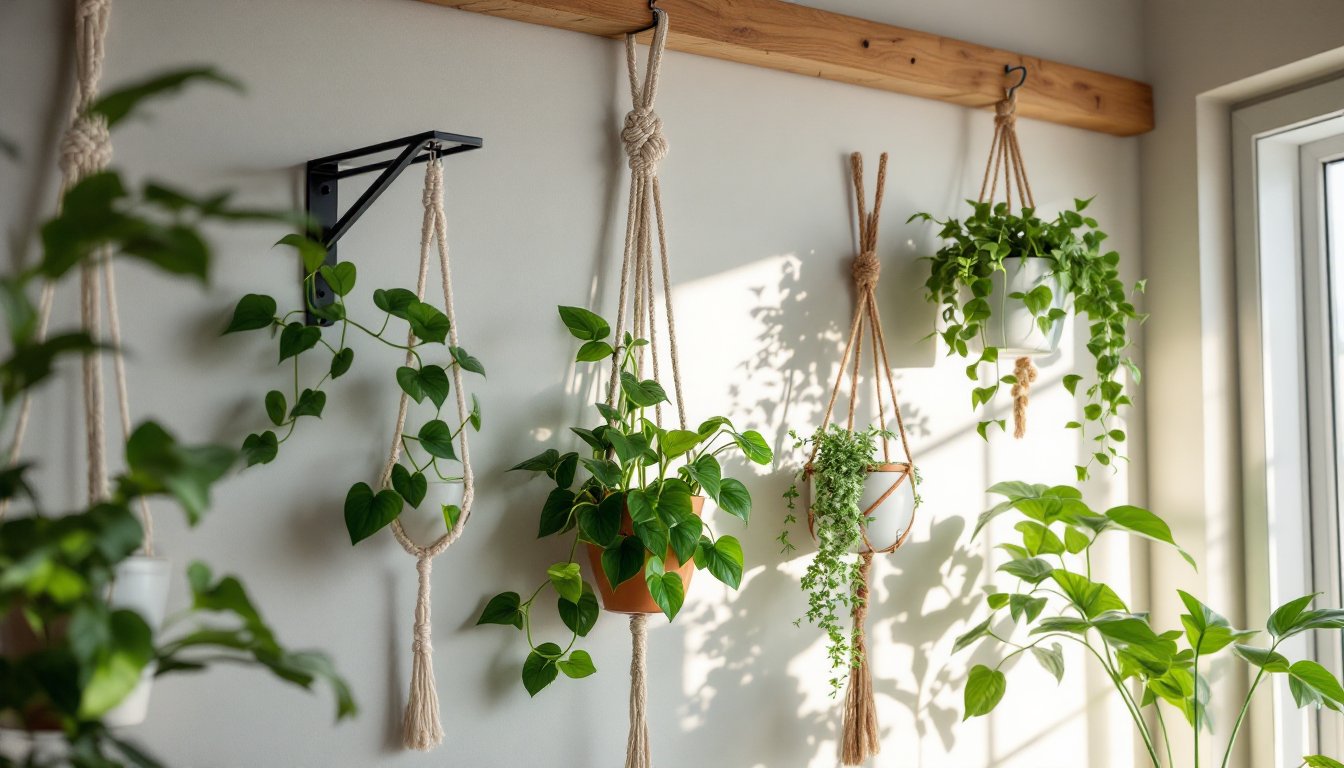
Macramé hangers are the most recognizable style, with knotted cord cradling the pot in a web-like nest. They’re handmade or mass-produced, ranging from tight, geometric knots to loose, bohemian drapes. Most use cotton, jute, or synthetic cord rated for the weight you’ll hang.
The appeal is versatility: macramé works in eclectic, farmhouse, and modern spaces if you pick the right knot pattern. Tighter weaves look contemporary: looser knots feel cottage-core. But, natural fibers absorb water, overwatering will eventually rot the cord. Synthetic versions last longer but lack that organic warmth.
Rope hangers, simple twisted or braided cords, offer durability and clean lines. They’re easier to install than knotted macramé and can support heavier pots. If you’re hanging a 4-inch or larger planter, rope becomes more practical. DIY Macrame Plant Hanger guides show how to craft your own with basic knotting skills.
Metal and Wire Hangers
Metal hangers include adjustable arms, spiral loops, and basket-style frames. Steel, aluminum, and powder-coated finishes dominate. They’re industrial-chic and handle heavy pots without flinching, think 8-inch planters or larger terracotta.
Wire hangers are lighter and more delicate, often with open-sided designs that let you see the pot and plant clearly. They work beautifully for displaying ceramic vessels or sculptural containers. Metal can rust or show water stains, so choose powder-coated or stainless steel for high-moisture areas like bathrooms.
One practical note: metal conduct temperature, so in direct sun, the hanger itself can heat up. Keep this in mind for sensitive plants during summer.
Ceramic and Glass Hangers
Ceramic and glass options are purely decorative and typically work with lighter pots or soil-less plantings like air plants. These hangers make a statement, they’re sculptural, catching light and creating visual interest on their own.
Ceramic hangers often feature geometric shapes or glazed finishes that echo your tile work or pottery elsewhere in the room. Glass versions are minimal and nearly invisible, letting the plant and pot be the star. Both require careful handling during installation: they’re breakable and usually call for secure wall-mounted hardware rather than ceiling hooks.
These are best reserved for lightweight trailing plants or small 2-3 inch pots. Overloading ceramic or glass puts stress on the attachment point and risks breakage.
How to Choose the Right Plant Hanger for Your Space
Start with weight. Know your pot’s weight when filled with soil and water, a 6-inch terracotta planter with soil can weigh 5-7 pounds. Rope and macramé hold this easily: ceramic does not. Check the hanger’s weight rating before buying.
Next, match your style intention. Modern spaces benefit from clean metal or minimal rope: bohemian rooms sing with thick, knotted macramé: transitional homes often work well with neutral rope or painted metal. Your hanger shouldn’t fight your existing palette and textures.
Consider your plant’s watering needs. Trailing succulents or air plants tolerate moisture-absorbent macramé. Tropical plants requiring consistent humidity are better with rope or metal that won’t degrade. Best house plants for hanging, such as Philodendron, String of Pearls, or Boston Ferns, all pair well with different hanger types depending on their care requirements.
Measure your ceiling height and available wall space. A ceiling hook works for pitched or standard ceilings: a beam hook suits rafters. Wall-mounted brackets suit corners or awkward spaces. If you have limited headroom, skip the macramé that adds 12-18 inches of drop and go with a compact metal bracket instead.
Finally, test installation. Not every ceiling can support a heavy plant hanger safely. 20 hanging plants that add lush greenery require proper anchoring, especially if your home has drywall, plaster, or popcorn ceilings. A toggle bolt or molly anchor rated for at least twice the weight of your plant setup is non-negotiable.
Installation Tips and Best Practices
Location and Light
Before hanging anything, verify light conditions. Most trailing plants tolerate medium indirect light, but some demand bright, near-window spots. Measure the light at different times of day if you’re new to the space. Place the hanger where the plant will thrive, not where decor looks perfect, a struggling plant isn’t decoration.
Hardware Selection
Use anchors rated for your setup. Drywall needs toggle bolts or heavy-duty molly anchors rated for 10+ pounds. Plaster demands toggle bolts as well: expansion anchors often fail in aged plaster. Ceiling joists (wood beams running perpendicular to your hanger) are ideal, screw directly into the joist with a lag bolt or heavy eye screw.
Find joists with a stud finder, or tap along the ceiling listening for solid spots. Standard ceiling joists sit 16 inches on center. If the spot you want isn’t a joist, use the strongest anchor available and don’t exceed weight limits.
Assembly and Testing
Assemble your hanger fully before hanging. Tie all knots firmly in macramé: thread rope through metal loops securely. Hang it on a temporary, lower hook first and load it with your pot. This is your safety test, does it hold? Does the knot slip? Does the rope fray? Make adjustments now.
Wear work gloves when handling rope or wire, fibers can splinter, and metal edges can cut. Use safety glasses when drilling into ceilings: dust and debris fall straight down.
Common Pitfalls
Don’t trust old anchors or hooks left by previous owners. Drywall deteriorates, and a hook rated for picture frames won’t hold a plant. Replace them. Don’t ignore water dripping onto floors or furniture below, use a drip tray or saucer, or position the plant where water can spill safely. Don’t leave the hanger unattended on a first installation: give it a week to settle, then check the anchor again.
For common house plants like Pothos and Spider Plants, weight rarely exceeds 3-4 pounds once established, but expect that range to grow as plants mature. Larger specimens benefit from upgraded hardware earlier rather than later.
Maintenance and Adjustment
Check your hangers seasonally. Rope stretches slightly over time: you may need to retie or shorten it. Water stains, dust, and sun fading are normal. Wipe down metal hangers quarterly, and soak cotton macramé in mild soap and water annually if it feels grimy.
Rotate your plants if they start reaching toward light. This keeps them balanced and prevents lopsided growth that stresses the hanger attachment on one side.