Most homeowners focus on indoor plant aesthetics, the lush greenery, the visual pop of color on a shelf. But what if your plants could work double duty, filling your home with natural fragrance while boosting its appearance? Scented indoor plants do exactly that. They bring the experience of a blooming garden indoors, eliminating the need for artificial air fresheners or candles. Whether you’re looking to create a calming bedroom retreat or freshen up your living room, fragrant plants offer an organic, constantly renewing solution. This guide walks you through the best-smelling indoor plants, what they need to thrive indoors, and how to care for them so they reward you with their full aromatic potential.
Table of Contents
ToggleKey Takeaways
- Scented indoor plants that smell good provide natural fragrance and air purification while improving mood and reducing stress better than synthetic air fresheners.
- Jasmine is the best choice for beginners seeking fragrant plants—it thrives in bright, indirect light, blooms within weeks of proper care, and releases its strongest scent in the evening for bedroom placement.
- Gardenias deliver rich, sweet fragrance but require specific conditions including 50% humidity, stable temperatures between 65–75°F, and consistent watering to prevent bud drop.
- Lavender is the easiest scented indoor plant for beginners because it loves dry conditions, needs infrequent watering, and requires at least 8 hours of daily sunlight in a sandy, well-draining mix.
- Less common fragrant plants like Hoya carnosa (wax flower) and fragrant orchid varieties offer reliable scent without the fussiness of gardenias and are non-toxic for households with pets.
- Success with indoor plants that smell good depends on matching the plant’s needs to your actual home conditions rather than hoping for ideal circumstances.
Why Add Scented Indoor Plants to Your Home
Fragrant plants aren’t a luxury, they’re a practical addition to any indoor space. Natural plant scents have been shown to improve mood and reduce stress far better than synthetic fragrances. Plus, unlike candles or air fresheners, plants work continuously without ongoing cost or chemical residue in your home.
Scented plants also purify air while they’re at it. Most flowering plants release oxygen as a byproduct of photosynthesis, so you’re getting cleaner air and pleasant fragrance simultaneously. If you’re already investing care into keeping houseplants alive, opting for varieties that smell good makes that effort even more worthwhile.
There’s another practical angle: scented plants can mask household odors naturally. A blooming jasmine or gardenia near a kitchen or bathroom handles lingering smells far more elegantly than spray air fresheners. Just place your plant strategically and let the fragrance work for you.
Jasmine: The Intoxicating Night-Blooming Classic
Jasmine is the gold standard for intoxicating indoor fragrance. The scent is strongest in the evening and at night, which makes it perfect for bedrooms or living areas where you unwind after work. If you’re placing jasmine in a bedroom, position it near a window so the scent drifts toward you as you sleep, many people find it deeply calming.
There are several jasmine varieties suitable for indoors. Arabian jasmine and Carolina jasmine are the most reliable for home growers. Both produce delicate white or pale yellow flowers and thrive in bright, indirect light. They’re not finicky plants, but they do appreciate consistent moisture and good air circulation.
Jasmine needs at least 6 hours of bright indirect light daily to bloom reliably. Without sufficient light, you’ll get foliage but fewer flowers, which means less fragrance. Keep the soil consistently moist but not waterlogged, overwatering kills jasmine faster than underwatering. Feed monthly during the growing season with a balanced fertilizer. Expect blooms to develop within weeks of ideal conditions being met. Many people growing best house plants find jasmine to be a rewarding first scented plant because it responds quickly to proper care.
Gardenias: Elegant Blooms With a Rich, Sweet Fragrance
Gardenias are the show-stoppers of scented houseplants. Those creamy white, velvety blooms smell like pure elegance, a rich, sweet fragrance that fills an entire room. The downside? Gardenias are notoriously finicky indoors. They demand specific conditions, but once you dial them in, the payoff is worth every bit of attention.
Gardenias are tropical plants that need warm, humid conditions year-round. Most homes are too dry for them, which is why many DIYers struggle. They also resent being moved once they’ve settled, so pick your spot carefully and leave them there. If you’re willing to invest time in humidity and consistent care, gardenias deliver unmatched fragrance.
Caring for Gardenia Plants Indoors
Start with the right location: a bright east or west-facing window with filtered sunlight is ideal. Direct afternoon sun can scorch leaves, but insufficient light prevents blooming altogether. Gardenias need temperatures between 65°F and 75°F during the day and slightly cooler at night, consistent warmth is non-negotiable.
Humidity is where most people falter. Gardenias need 50% or higher humidity. Set the pot on a pebble tray with water underneath (the pot sits on pebbles above the water so roots don’t sit in it), or mist the leaves regularly with distilled water. Tap water’s minerals can cause leaf spotting. Keep the soil slightly moist and feed with an acidic fertilizer formulated for camellias or gardenias, this maintains the pH they prefer.
Buds dropping before flowers open is the classic gardenia complaint. This usually signals sudden temperature swings, inconsistent watering, or low humidity. Stable conditions are everything. Check resources like The Spruce for specific humidity solutions if you’re struggling, and consider a small humidifier near the plant during winter months when heating dries indoor air.
Lavender: Calming Scent and Practical Uses
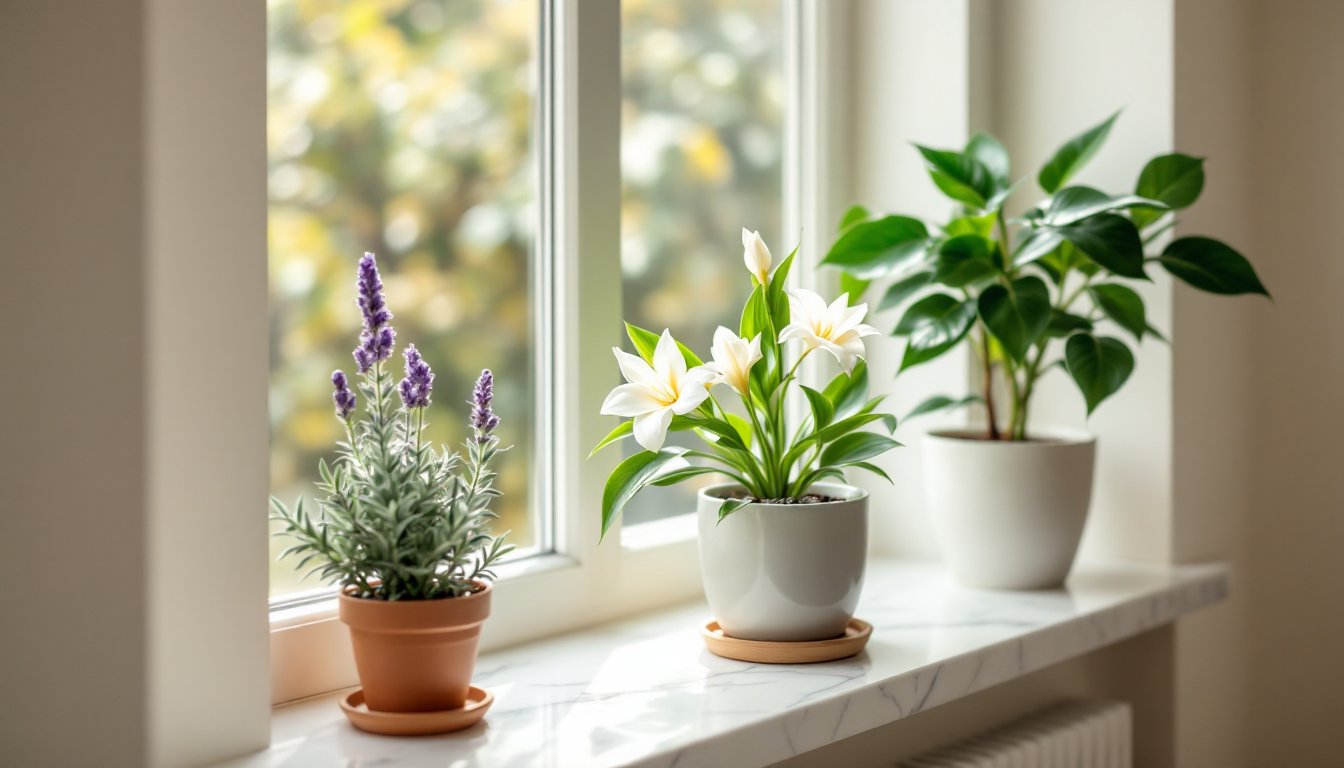
Lavender brings herbal, calming fragrance indoors while offering practical uses beyond just smelling good. The dried flowers work in sachets, DIY cleaning blends, or even baking. Grow lavender indoors and you’ve got a mini medicinal herb garden.
Indoor lavender thrives in bright light, at least 8 hours daily, ideally in a south-facing window. Unlike gardenias, lavender loves dry conditions and prefers infrequent watering. This makes it one of the easiest scented plants for beginners. Let soil dry out between waterings. Overwatering is the quickest way to kill lavender, so err on the side of dry rather than moist.
Use a sandy, well-draining potting mix (not standard peat-heavy potting soil). Lavender naturally grows in poor soil, so it doesn’t need frequent feeding. In fact, rich fertilizer encourages leafy growth at the expense of flowers. Prune lightly after blooming to maintain a compact shape and encourage next season’s flowers. Many homeowners growing tropical house plants alongside herbal plants like lavender find them a refreshing change of pace because lavender demands so much less fussing.
Orchids and Other Fragrant Bloomers
Not all orchids are fragrant, in fact, many popular varieties sacrifice scent for sheer beauty. But certain orchid types produce incredible fragrance, particularly Oncidium orchids and some Dendrobium varieties. If you’re drawn to orchids, seek out fragrant cultivars when shopping. Tags or nursery staff can guide you.
Other underrated scented plants deserve mention here. Hoya carnosa (wax flower) produces clusters of small, pink-white flowers with a honeyed scent. It’s a vining plant that grows well in bright, indirect light and tolerates irregular watering better than gardenias. Geraniums, true geraniums, not pelargoniums, produce scented foliage and small flowers. Brush the leaves and release a fresh, peppery aroma. Several easy house plants in the scented category perform reliably indoors without the fussiness of gardenias.
A note on orchids: they prefer high humidity and dappled light (as they’d naturally get on a forest branch). Don’t overwater, water weekly or every 10 days, depending on your home’s humidity. Bark-based orchid mix drains faster than regular potting soil, which is essential. For those with house plants safe for pets, many fragrant orchids and hoyas are non-toxic, making them ideal for households with curious cats or dogs. Interior design publications like Gardenista regularly feature scented orchids as statement plants in modern homes, if you’re looking for inspiration on placement and styling.
Conclusion
Adding scent to your indoor plant collection elevates the entire experience of having plants in your home. Start with jasmine or lavender if you want reliable bloomers that don’t demand constant adjustment. Upgrade to gardenias once you’re confident in humidity and light control. Whatever you choose, the key is matching the plant’s needs to your home’s actual conditions, not wishful thinking about what conditions could be. Place your scented plant somewhere you’ll enjoy the fragrance daily, give it the light and water it craves, and you’ll soon understand why fragrant houseplants have remained beloved for centuries.